
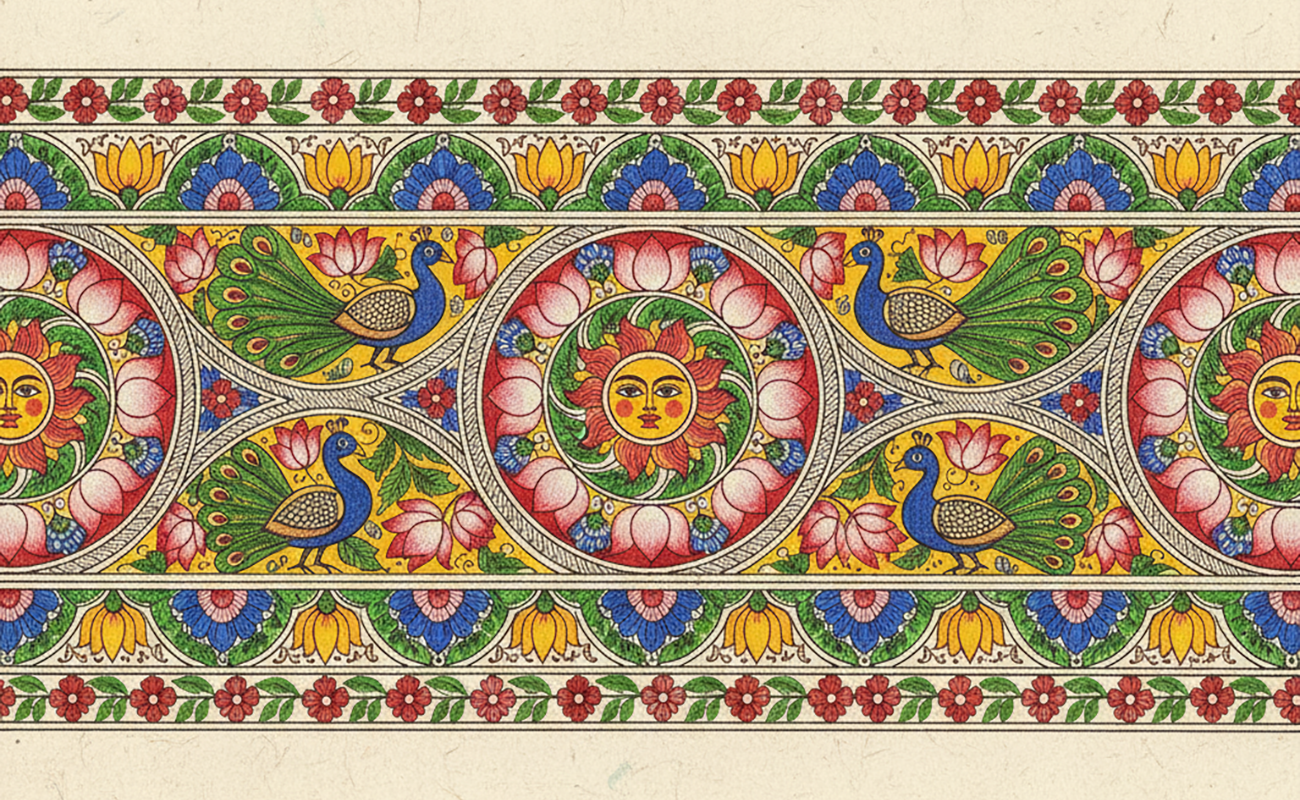
India has always been a land of colours and creativity. Among its many art forms, Madhubani painting stands out as one of the oldest and most beautiful. With its bright colours and detailed designs, this art is not just painting—it’s storytelling on paper, cloth, and walls.
Where it All Began
Madhubani comes from the Mithila region of Bihar. The word itself means “forest of honey.” This art is believed to be more than 2,500 years old.
There’s a famous story behind it—when King Janaka of Mithila arranged the wedding of his daughter Sita with Lord Rama, he asked artists to decorate his palace walls. From then on, the people of Mithila made it a tradition to paint their homes during weddings and festivals.
How to Recognise Madhubani
Madhubani paintings are very easy to spot. They have their own special style:
Colours come from natural things like flowers, leaves, turmeric, and rice paste.
The designs have thin lines, double borders, and very fine details.
The themes are close to our heart—nature, animals, birds, gods, goddesses, and stories from the Ramayana and Mahabharata.
Symbols like fish, lotus, peacock, and sun are used to show happiness, love, and good fortune.
And here’s something interesting: artists don’t use brushes. They paint with fingers, twigs, and even matchsticks!
Why Madhubani Matters to Us
Madhubani is not just art—it is a reflection of Indian life.
It shows our devotion by painting gods and mythological stories.
It reminds us of our bond with nature through animals and plants.
It brings families together during festivals, marriages, and harvest time.
Most importantly, it celebrates the creativity of women, who have kept this art alive by passing it down from one generation to the next.
Even today, when we look at a Madhubani painting, it feels like seeing a piece of India’s soul on canvas.