
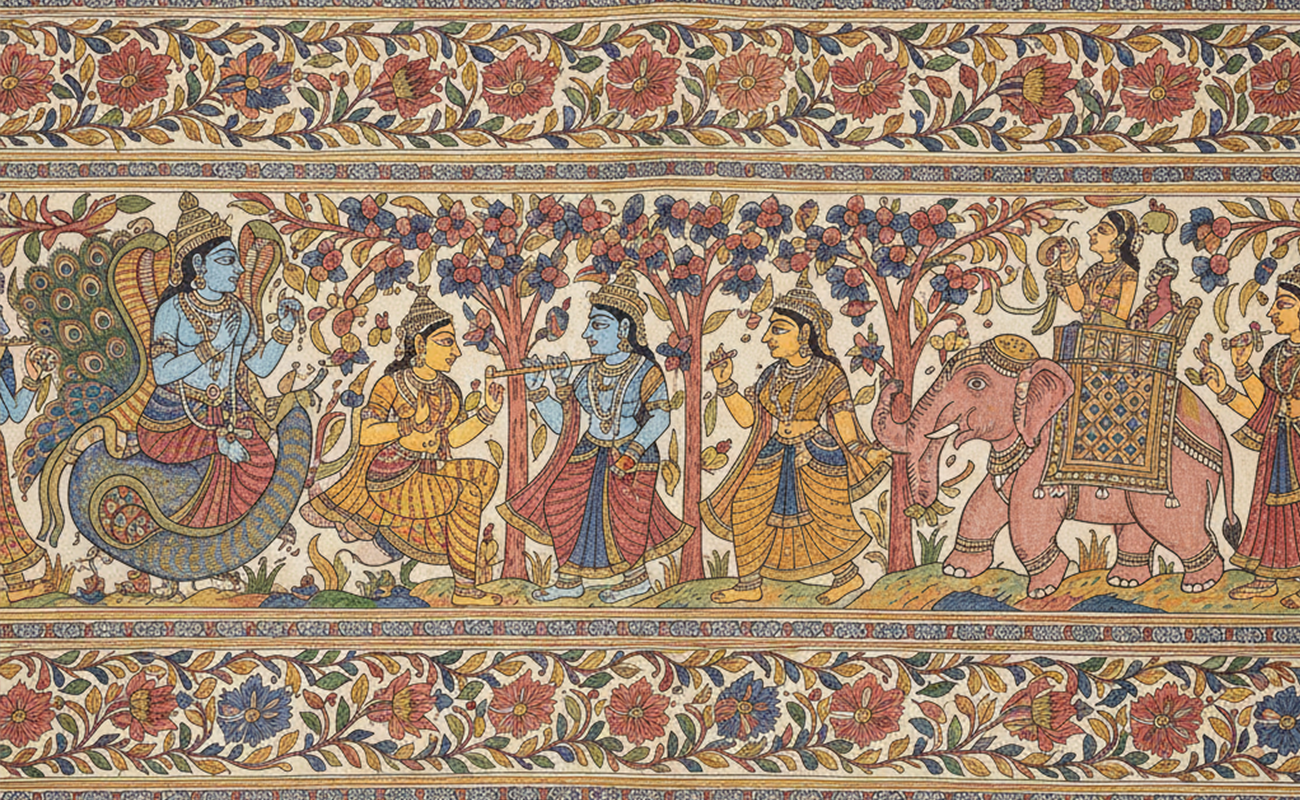
India has always been famous for its arts and crafts. One such gem is Kalamkari – a hand-painted fabric art that feels like storytelling on cloth. With its natural colours and beautiful designs, Kalamkari is more than just decoration; it is history and culture woven together.
Where It All Began
The word Kalamkari comes from two Persian words – Kalam (pen) and Kari (work). Simply put, it means “pen work”. Artists use a special bamboo pen to draw on fabric, and this art has been alive in Andhra Pradesh and Telangana for centuries.
Kalamkari has two popular styles:
Srikalahasti style: Artists draw by hand using a pen, often showing stories from the Ramayana and Mahabharata.
Machilipatnam style: Here, wooden blocks are used to print repeating patterns.
Both use only natural dyes—from plants, roots, and even minerals—keeping the art close to nature.
Colours and Patterns That Speak
Kalamkari designs are full of life. You’ll often see:
Flowers, birds, peacocks, and elephants.
Gods, goddesses, and mythological scenes.
Borders decorated with vines and simple shapes to complete the fabric.
The colours are soft yet rich—reds, blues, yellows, and greens—all made without chemicals. Each piece takes a lot of patience, as the cloth is washed, painted, dried, and coloured many times before it is ready.
More Than Just Art
Kalamkari is like a mirror of Indian values. It shows our love for stories, faith, and nature. The use of natural dyes shows respect for the environment. The patience of the artists reflects the Indian belief that true beauty takes time and dedication.
So, when you see a Kalamkari saree, dupatta, or wall hanging, remember—it’s not just fabric. It’s a piece of India’s soul, painted with love and care.