
In India’s treasure chest of textiles, Patola from Gujarat shines like a jewel. Woven with fine silk, bright colours, and patterns that look the same on both sides, Patola is not just a saree—it is pride, luxury, and tradition, all woven together.
Where Patola Began
Patola weaving comes from Patan, a historic town in Gujarat. This art is more than 900 years old. It is believed that the Salvi weavers brought this skill from Maharashtra and Karnataka during the 12th century.
In those days, only royal families and wealthy merchants wore Patola sarees, because the weaving took so much time and care. Owning a Patola was like wearing royalty on your shoulders.
The Magic of Making Patola
Patola is made with a rare technique called double ikkat—where both the lengthwise (warp) and crosswise (weft) threads are tied and dyed before weaving.
Each thread is tied in tiny sections and dyed again and again, till the exact colours and shapes are ready.
The threads are then woven, and the design appears perfectly on both sides of the cloth.
It’s such a detailed process that one saree can take 6 months to a year to complete. Truly, it’s like weaving patience into fabric.
Colours and Designs
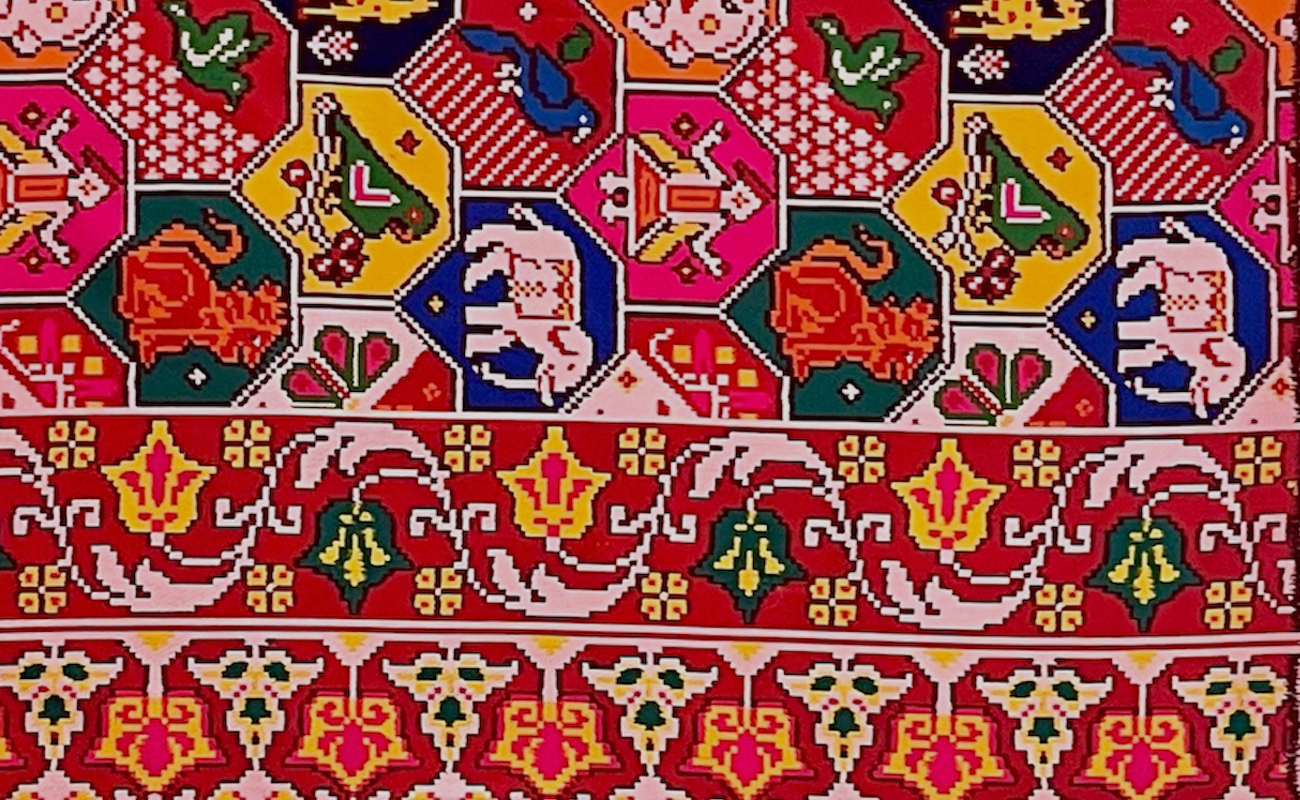
Patola is famous for its vibrant colours—red, green, yellow, blue—made from natural dyes. Common motifs include:
Squares and diamonds for balance and harmony.
Lotus and jasmine flowers for beauty and purity.
Birds, elephants, and dancing figures for joy and prosperity.
What makes Patola magical is its symmetry—the design looks exactly the same on both sides, a sign of unmatched craftsmanship.
Why Patola Still Matters
Patola is not just silk and dye—it is Gujarat’s living heritage.
In weddings and festivals, wearing a Patola saree is a mark of good luck and prosperity.
It celebrates the patience, creativity, and skill of Indian artisans.
With its natural colours and handwoven methods, it also reflects sustainability and respect for nature.
A Patola is not just worn—it is cherished, celebrated, and passed down like a family treasure.